

Adult Therapy
One-on-one sessions that offer a holistic look at your story and distress. Let’s move towards safety, purpose, and reworking the old with the new.
You deserve a healing journey
Georgia • South Carolina • New York
The cornerstone of Merecías Therapy is that you deserve therapy—full stop. (It’s even in the name.) But beyond that, you deserve therapy that is seamless, inclusive, and attuned. A safe, clinically grounded environment that is accessible anywhere you are; deeply affirming with a liberatory framework; and which allows the work to unfold organically, peeling back the layers at your own pace. I’m so grateful that you’re here, and I look forward to seeing if Merecías Therapy is the right fit for you.

Transformative shifts can feel daunting, but it’s worth the effort, worth the care. Start your healing journey with therapeutic exploration and evidence-informed support.

One-on-one sessions that offer a holistic look at your story and distress. Let’s move towards safety, purpose, and reworking the old with the new.

Developmentally attuned therapy for ages 12 and up. All those behaviors and emotions aren’t just something to fix, they’re a journey to understand. Let’s set them up for lifelong courage and curiosity.

Maybe you’d like to shore up your strengths, or maybe you’re feeling stuck in a negative pattern and not really sure how you got there. Let’s work towards healthier attachment and communication.

Too many changes and conflict all at once? Are you feeling out of depth or out of touch with each other? Let’s work towards more connection and stabilization.

Currently accepting new clients! I’m based in Savannah GA, but telehealth is available in all of Georgia, South Carolina, and New York.
I’ve worked in private practice for over ten years, and my clinical toolbox is sizable for supporting my clients with both depth and safety.
My early years as a therapist focused on teens and their families, expressive techniques, and whole spectrum identity affirmation. Eventually I also came to specialize in couples therapy and trauma therapy, and found both to be so meaningful and rewarding. Lately, a lot of my work centers on newly recognized neurodivergent identities and support.
I welcome it all! I feel so honored to be a therapist and to gradually see, time and time again, the groundedness and flow state of my clients as they do this work.
Here’s what you can expect from me as a therapist: presence, patience, perspective, persistence, and playfulness.
There’s so much that goes into feeling our best—alive, resilient—and far too often we’re left isolated, stuck, or lost. There are many inner and outer contexts at play that we might not realize influence this mess of disorientation and disconnection.
I invite anyone seeking to gain greater awareness, belonging, and trust with themselves and their relationships.
Whether it’s in individual, couples, or family sessions, we will:
Learn. Telling our story to someone else can be like telling it to ourselves, too. We will enter your emotional world, befriend it, and share it.
Unlearn. The present moment holds the past. Sometimes what our brains consider safe and known doesn’t always align with what we want out of life.
Release. Unburden any negative beliefs or distress to find compassion, curiosity, and choice.
Reach. Take the risk of awkward vulnerability to embrace what you’re really longing for.

EFT is based on attachment science.
In ideal attachment, I reach for others when I am in distress, and respond to others that I care about when I see they are in distress. But a lot of times, we get stuck. We’re still good people, just with very good defenses. It becomes more and more difficult to hear each other’s underlying attachment longings. We need to make our insides more transparent so we are less reactive and able to go to each other.
This model focuses on the present moment, primary emotions, process over content, and positions or patterns in the relationship.
Stages:
Helpful for: Relationship De-escalation & Repair, Affair Recovery, Resentment Healing, Rebuilding Connection & Intimacy, Communication Issues, Family Conflict
Just like people get stuck, so do the multiple and distinct aspects of ourselves. One example is our inner child. These parts are usually helpful in protecting us—by seeking to control, soothe, or shut out. But other times, it seems like these parts are in the driver’s seat more than our Self. There can be internal conflict, such as internalized aggression, shame, regression, perfectionism, and sabotaging.
IFS Therapy has four goals, to:
Helpful for: Unresolved Childhood Trauma, Attachment Healing, Identity Healing, Depression, Dismantling Shame, Nervous System Overwhelm
MBCT seeks to change the way you relate to your internal experience. It encourages gentle awareness of negative thoughts instead of suppression and spiraling. When you’re more attuned to the changes happening in your mind and body, you’re better able to emotionally regulate, practice self-compassion, and develop a more present-focused and accepting mindset. Ultimately, you will be able to handle mood fluctuations in a constructive, adaptive way.
Helpful for: Depression, Anxiety, Bipolar Disorder, Chronic Stress, Substance Use Challenges, Decision-Making, Major Life Changes, Disillusionment & Dissociation
I tend to use this in conjunction with other modalities. SE helps promote mind-body coherence and regulation by accessing and then physically releasing stored emotions and distress.
Steps:
Helpful for: Unprocessed Trauma, Nervous System Overwhelm, Feeling Scattered or Distracted
This isn’t like you might’ve seen in movies or on the news. The hypnotherapeutic state is a natural state of mind, where you are very relaxed and focused. This will bypass the critical factor of the mind and open you up to an observer-self.
You are still in charge. You will be guided to re-experience the traumatic memory in detail, within the safe container of the session and my therapeutic presence. Trauma brain gets stuck in the middle of these memories, and I am here to help get you through the timeline and update the brain to know that it’s over.
The goal is to:
Helpful for: Single-Incident Trauma (e.g., a car accident, a natural disaster, a death, an argument or betrayal, an assault, a difficult birth)
Sometimes avoidance, distraction, or trying to relax ends up reinforcing your anxiety. We can become more vigilant, and more restricted, until we’ve ended up with an entire system of rules and threats.
Sometimes, in order to reduce your anxiety and obsessions, you need to face the fears and sit with the anxiety. You’re exposed, and prevented from making yourself immediately feel better, and gradually you learn that you can actually tolerate the anxiety. This builds true resilience, not just temporary coping.
Yes, this is possible in virtual sessions!
Helpful for: OCD, Anxiety
As needed referrals for transgender medical care, disability, emotional support animals, return to school forms, etc.
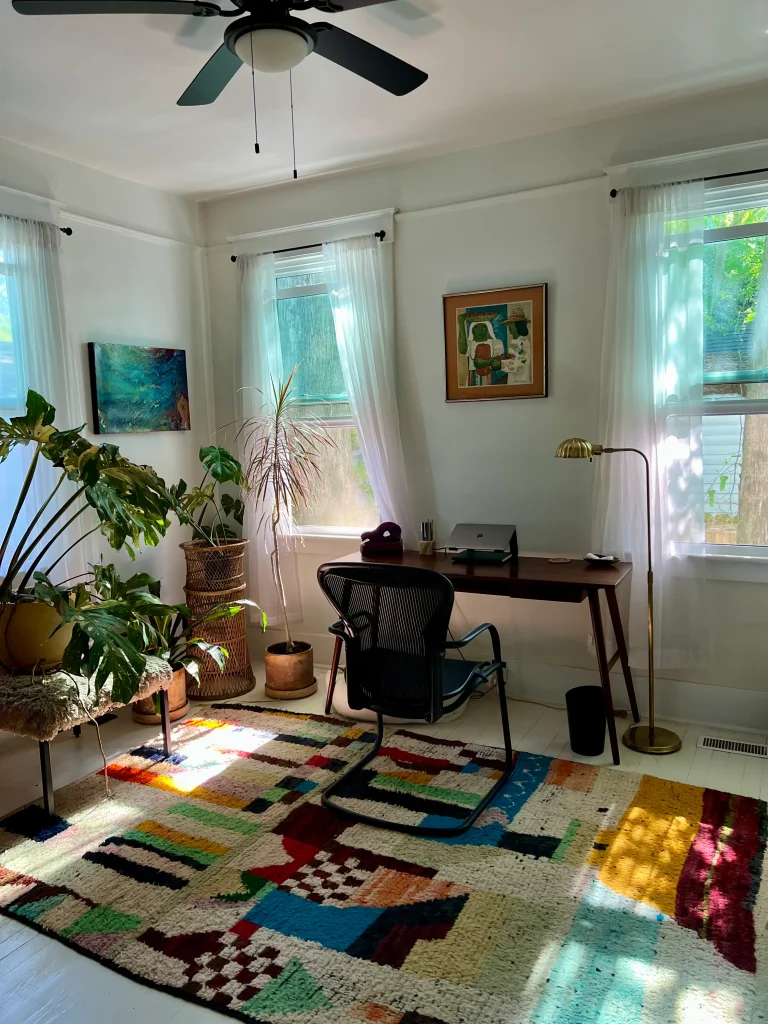
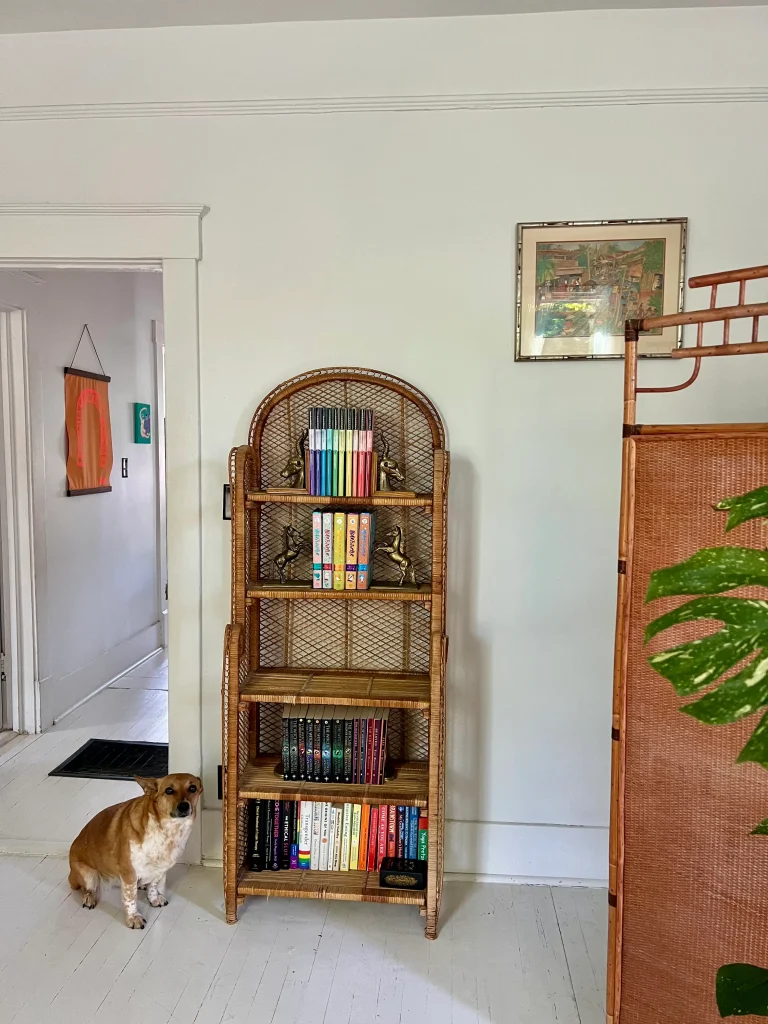
(Miss Ma’am is not a therapy dog, but she is a dog that’s online sometimes)

For the community, by the community. An LGBTQIA+ affirming and anti-oppressive practice, always.

Part of the ThrivingCampus community, a network of therapists that specialize in working with college students.

A promise to never use AI to record therapy sessions or write session notes. Confidential and human-centered, always.

FEES: $150 per 45-minute session, $280 per 90-minute session. Longer sessions may be preferred for your first appointment, couples and family work, and/or more intensive situations.
PAYMENT: Merecías Therapy is not accepting insurance at this time, but can offer a monthly superbill for you to submit to your insurance for reimbursement. While this might seem like an extra step, this allows you to get personalized care quicker, for as long as you might want, and regardless of diagnosis. Credit/debit cards and HSA cards are accepted forms of payment.
MEETINGS: We will meet via a HIPAA-compliant video platform that’s accessible from a dedicated phone app or computer browser. Virtual therapy is proven to be as clinically effective as in-person, without any location-based limitations like packed schedules, commuting, or childcare.
If you’d rather touch base with me first, you can complete a short, secure inquiry form and I will follow-up with you for a brief consultation.
If you’d prefer to skip to scheduling, you can take a look at my calendar availability and book now.
